|

|
|
|
|
September 2016 
|
Glad to report a great turnout
at the World Energy Engineering Conference (WEEC) for
my talk on "Energy Breakthroughs that will have a Public
Impact" (slides posted on our website) Also worth
noting, our Amazon Smile banner is now posted on the IRI homepage
so the reminder to shop at Amazon through the Smile
program will help IRI. Here is the link:
so you can program your
Amazon shopping experience with IRI in mind!
The first story of this month
follows up on our July lead article from the EPFL discovery
of the right nanopore-sized osmotic electricity generation
reported in Nature magazine. Now, the news sources are
speculating about the type of energy future this represents when
every mouth of a fresh water river going into the salty ionized
sea represents an easy-to-use osmotic pressure to generate clean
electricity. The four-minute video is excellent by the way and I
used it in my WEEC presentation to explain osmosis an the EPFL
method of electrical generation.
Our second story is a great
review of our last Conference on Future Energy (COFE8). For those
who did not attend, this provides a summary of the presentations.
IRI is now currently working with COFE presenter Mike Gamble on
his replication of the Boeing control moment gyro (CMG) which is
used to keep satellites and the ISS aloft. We also look forward
to helping Bob DeBiase fabricate his Casimir force producer with
the nanotechnology abilities of another COFE presenter, Dr.
Thorsten Ludwig, who has volunteered to assist in the project.
Both of these are projected to establish new methods of
transportation or propulsion that use either electricity or zero
point energy. Therefore, they represent revolutionary breakthroughs
in propulsion methodology.
The third story is an unlikely
energy source: fish scales. This is the first demonstration that
they are piezoelectric, just like human bones are, so they
generate electricity with pressure. It is another possible avenue
for nanogeneration of electricity under mechanical simuli.
Our fourth story is huge
because it solves a big environmental problem: how to trap CO2
and convert it into something useful. With 30 billion tons of CO2
going into the atmosphere every year, it is a growing menace and
this breakthrough converts it into energy-rich fuel using a
nanosilicon hydride with a carbon neutral cycle. The Nature
Communications article is very promising.
The last story is a great one
for those of us who get excited by "wearables" and
especially electric clothes. Combining solar and wind power
(triboelectric generation), a bracelet has been designed by the
father of energy harvesting, Dr. Zhong Lin Wang. Dr. Wang is an
amazing genius and
his homepage is mind-boggling. He also has
a great eight page colorful intro to energy harvesting available
for free online which is highly recommended for those students
and professionals who need to learn more about this billion
dollar market. Check out his #8 "Fiber-based nanogenerators
for power shirt" from this 2008 report. The bracelet is just
a spinoff from his original ZnO nanowired power shirt.
|
|
|
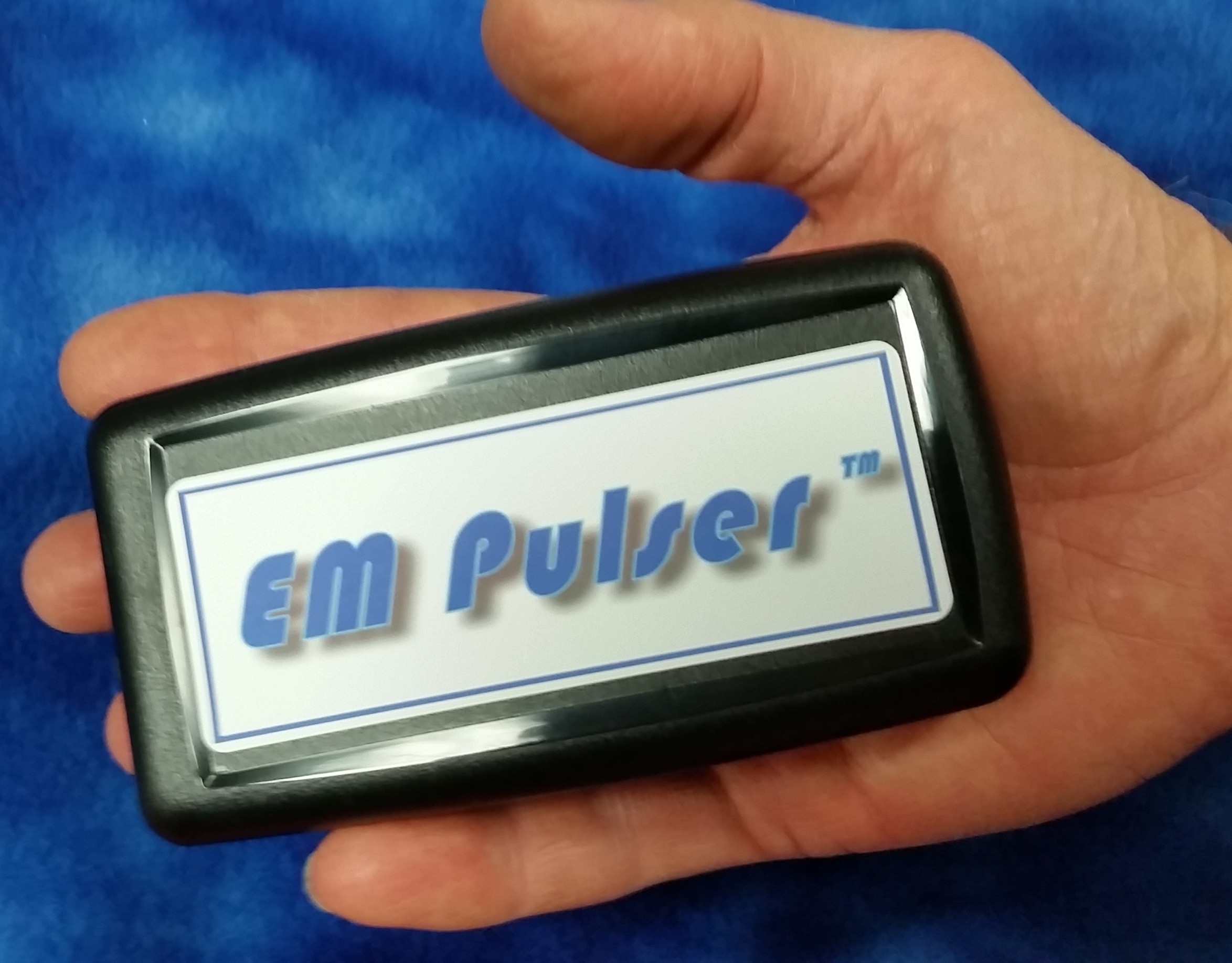
Our Best Selling nano
second PEMFdevice
|
|
|
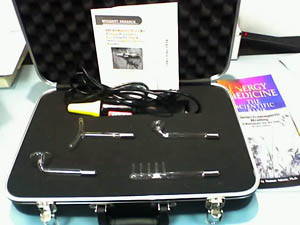
Our most
popular HIgh voltage device
|
|
|
|
Best NanoSecond PEMF for
arthritis, bone issues
|
|
|
|
|
1) Are Fresh Water Boundaries The Future of Energy
Harvesting?
|
|
By Donald Krambeck, All About
Circuits, September 2016
|
|
|
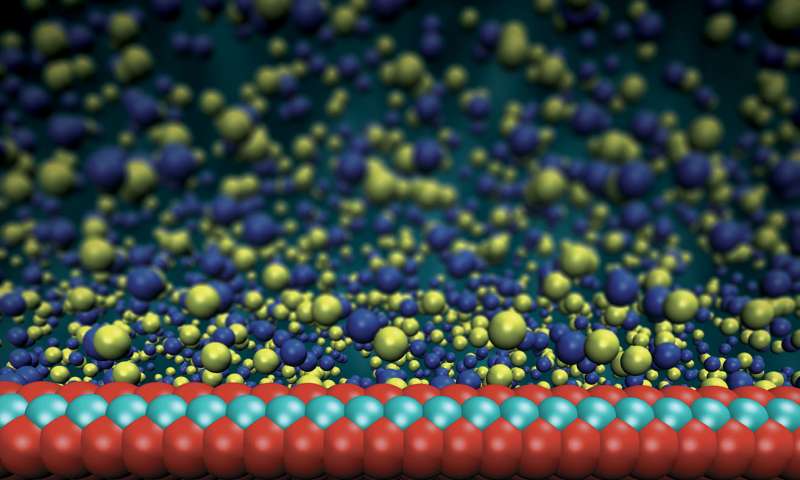
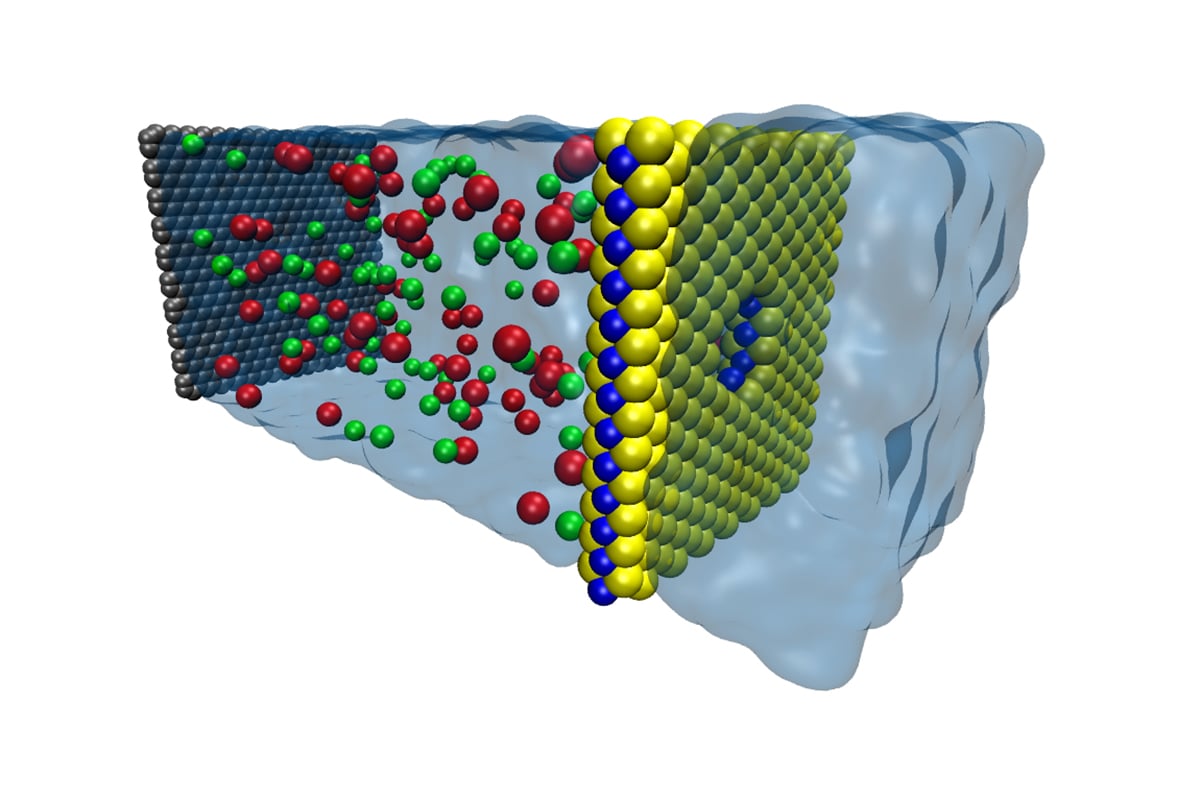
A rendering of the molybdemun sulfide membrane with
nanopore being used as a filter to create fresh water. Credit:
University of Illinois.
|
|
Researchers have developed a nano-sized membrane that
can capture energy from osmosis. Is this the dawn of "blue
energy"?
Capturing Energy in Estuaries
There are quite a number of renewable energy sources
as of today. The "green" movement has seen the rise
of energy harvesting from sources like solar,
geothermal, and
hydro-power.
However, some days, the sun doesn't shine and the
wind doesn't blow, causing a limit on how much power some of these
sources can produce. So what harm could one more source of clean
energy do? Researchers at the Ècole Polytechnique
Fédérale de Lausanne (EPFL) might have found a way around the
limitations set on some renewable sources of energy.
Their new energy source? The boundaries between
seawater and fresh water.
On July 13th, 2016, the research team's discoveries
were published in the journal, Nature.
The team developed a unique way to produce a large amount of
energy at any fresh-seawater boundary.
The energy is produced through osmosis, which occurs
when water with a high salt content comes in contact with fresh
water through a permeable membrane. When seawater enters fresh
water, salt ions are passed through, which have an electrical
charge. The ions continue to pass through until the salinity of
each body of water is at equilibrium.
So what does all of this have to do with renewable
energy? If one can create a layer of material and place it at the
crossing point the bodies of water, the electrical energy passed
through the salt ions could potentially be harnessed for use.
This is exactly what the researchers at EPFL's
Laboratory of Nanoscale Biology have done. They created a membrane
that is comprised of only three atoms-yes, only three. This
semipermeable membrane, which is made of MoS2 (molybdenum
disulfide), is used to separate the two fluids with different
salt concentrations.
Designing a
Nano-Scale Membrane
Knowledge about the process of ions
transferring between fresh and seawater isn't new, but rather
it is EPFL's membrane that is cutting-edge. By producing such
a small membrane, a greater current can be obtained due to
the decrease of resistivity.
Molybdenum disulfide is rather cheap as a material,
which is a huge plus if the membrane were to be scaled across
hundreds of miles. The membrane is composed of a vast amount of
pores (of the nanometer scale) which allows the salt ions to pass
through the membrane and harnesses the ions charge to generate
electricity. Essentially, the ions pass through the nanopores and
their electrons are transferred into electrodes.
Fortunately, the researchers' choice of material in
the membrane allows for the positively charged ions to pass
through whilst repelling most of the negatively charged ions. This
creates a potential difference and effectively a voltage
difference between the two liquids as the positive ions and
negative ions build up. It is this voltage that allows the
generated current to flow readily.
Jiandong Feng, the lead author of the research,
has expressed that one of the challenges his team faced was
determining the size of the openings in the membrane that the
molecules can pass through. These openings are called nanopores.
According to Feng, making the nanopores too large
would allow negative ions to pass through. Those electrons carried
through the membrane would essentially be wasted and the voltage
gathered by the membrane would be low as a result. On the other
hand, if the nanopores are too small, potentially fewer ions could
pass through the membrane at all leaving the current ultimately
too weak.
Potential for
Renewable Energy
The use of such a small membrane could lead to
an astonishing amount of energy harnessed from a simple
chemical reaction.
According to the researchers' analysis and
calculations, from a 1 m2 MoS2 membrane with only 30% of
its surface coated by the nanopores, 1 MW of electricity can be
produced. That's enough to provide power to 50,000 energy saving
light bulbs!
The molybdenum disulfide compound is
naturally found and can also be created by a process known as
chemical vapor deposition. With this material being so readily
available, the membrane can be scaled for a larger amount of
energy production. However, scaling is still a challenge because
creating uniform pores throughout the membrane is proving
difficult.
Nevertheless, this is a problem that can be
eventually solved. The research team ran a nanotransistor from the
current that was generated through a single nanopore and found
that it demonstrated itself to be a self-powered nanosystem.
Nano-Membranes in
Creating Potable Water
EPFL is not the only one researching this topic. They
have been working in tandem with a group of researchers led
by Professor Narayana Aluru at the University of
Illinois at Urbana-Champaign. The US-based team has aided the EPFL
team with molecular dynamic simulations to help predict molecule
behavior and better design the membranes and nanopores.
Aluru's interest in working with molybdenum disulfide
membranes, however, does not focus on the potential for
harvestable energy. Instead, his team has been looking at these membranes
as a way to convert salt water into potable fresh
water.
In short, this membrane technology could leverage the
basic process of osmosis to not only produce sustainable energy
but also provide drinkable water.
Blue energy is a growing trend which could gain
massive traction in the upcoming years as the technology
advances.
Once their engineering model and calculations become
more efficient, we could see a future where blue energy is widely
available. The simplistic process known as osmosis could play a
tremendous part in generating renewable energy and beyond.
Journal
Paper in NATURE
|
|
2) Our COFE8 Conference Showcased Many
Breakthroughs
|
|
Integrity Research
Institute Press Release
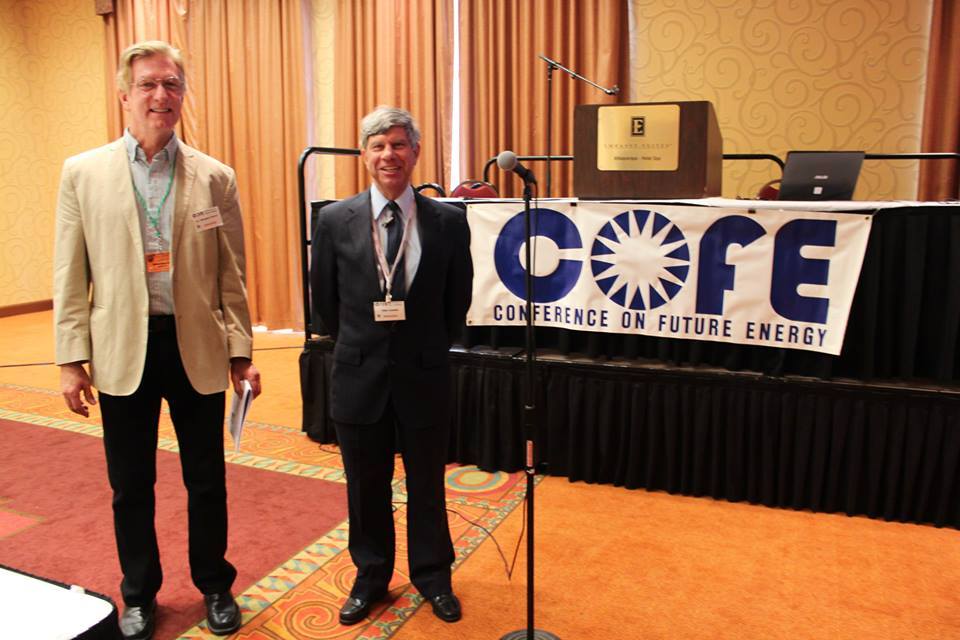
Integrity Research Institute (IRI) has the tradition
of presenting the best and latest energy discoveries whether in
the technical, environmental, space and human health areas. These
are the hallmark of our conferences and all of us at IRI were very
happy to host our Eighth International Conference on Future Energy
(COFE8) which provided the latest developments on Energy,
Propulsion and Bioenergetics with superb speakers together who
traveled far and wide to attend.
|
|
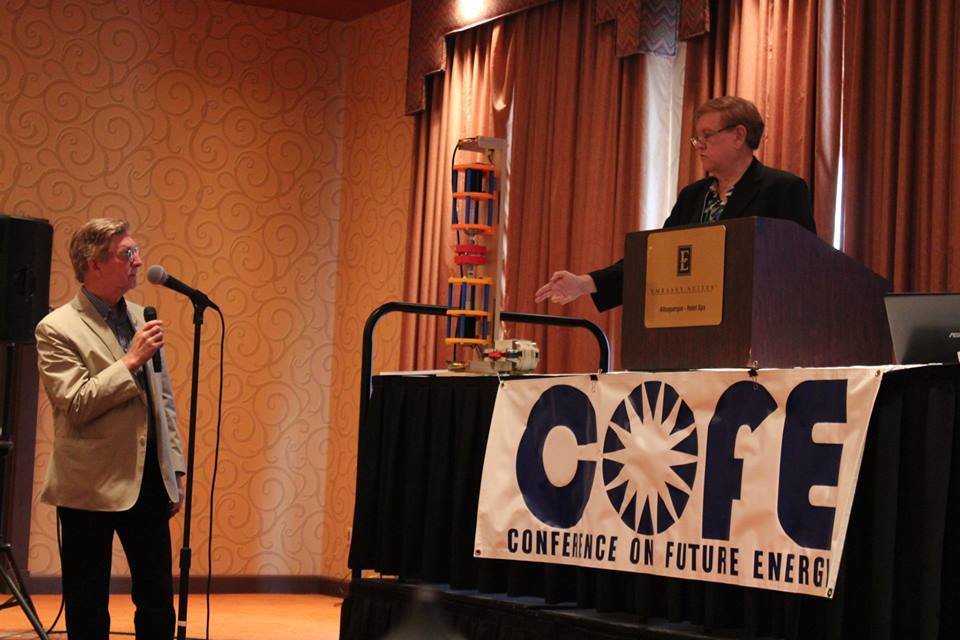
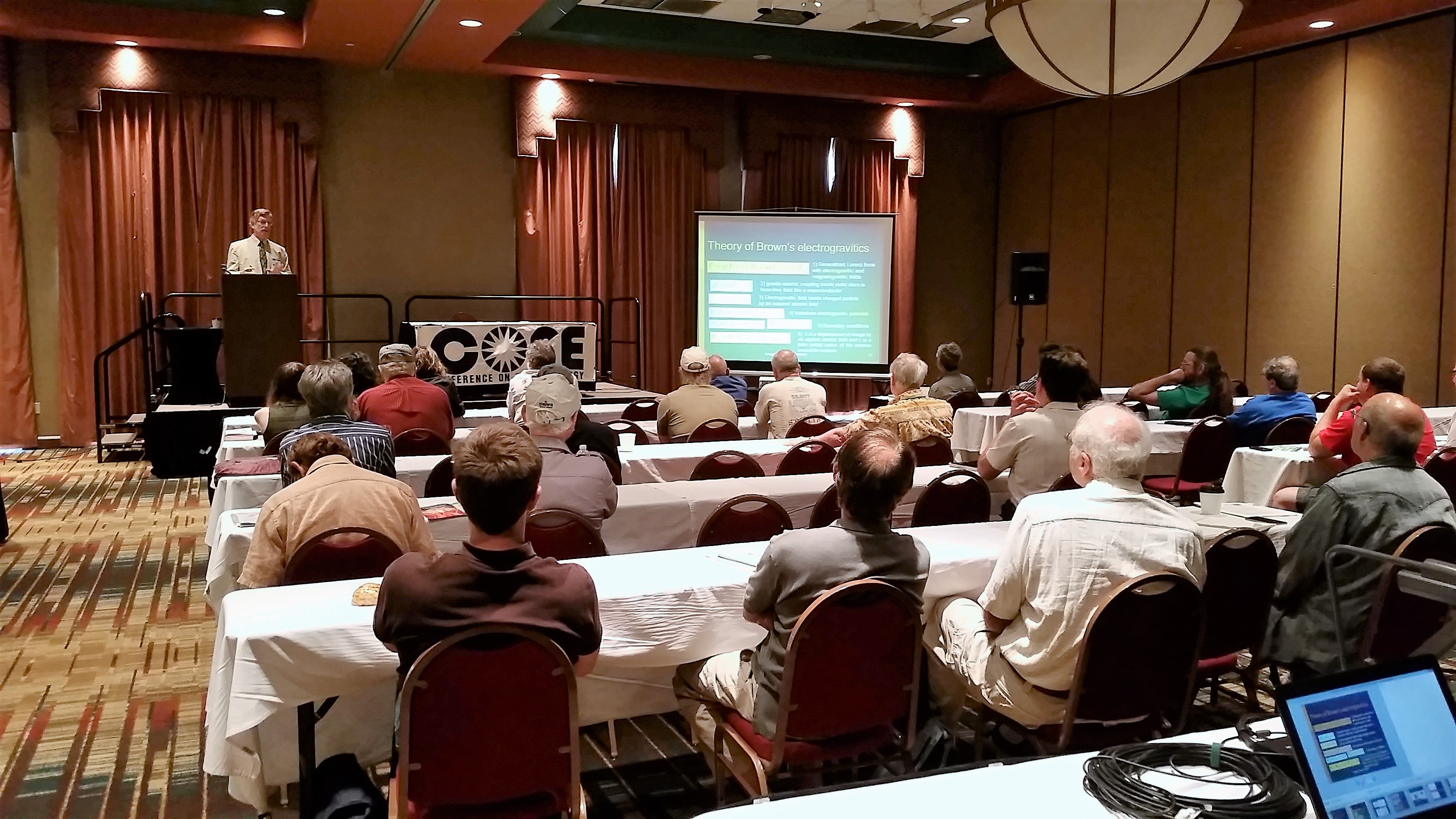
President Valone, speaking at COFE8.
|
Our Venue was the Conference Center at the Embassy
Suites Hotel in Albuquerque, New Mexico. The speakers included an
impressive list from many disciplines and areas such as:
Propulsion and Space scientists, Wellness Experts, an Award
Winning Journalist, University professors, Enviromental
specialists, and private entrepreneurs.
This year in addition to our amazing speakers on
energy, bioenergy and propulsion, we had two stellar,
internationally known speakers: Miss Linda Moulton Howe, award
winning journalists and Neurosurgeon Dr Norman Shealy, inventor of
the TENS unit and Fouder of HOLOS University.
|
|
|
|
|
Linda Moulton Howe
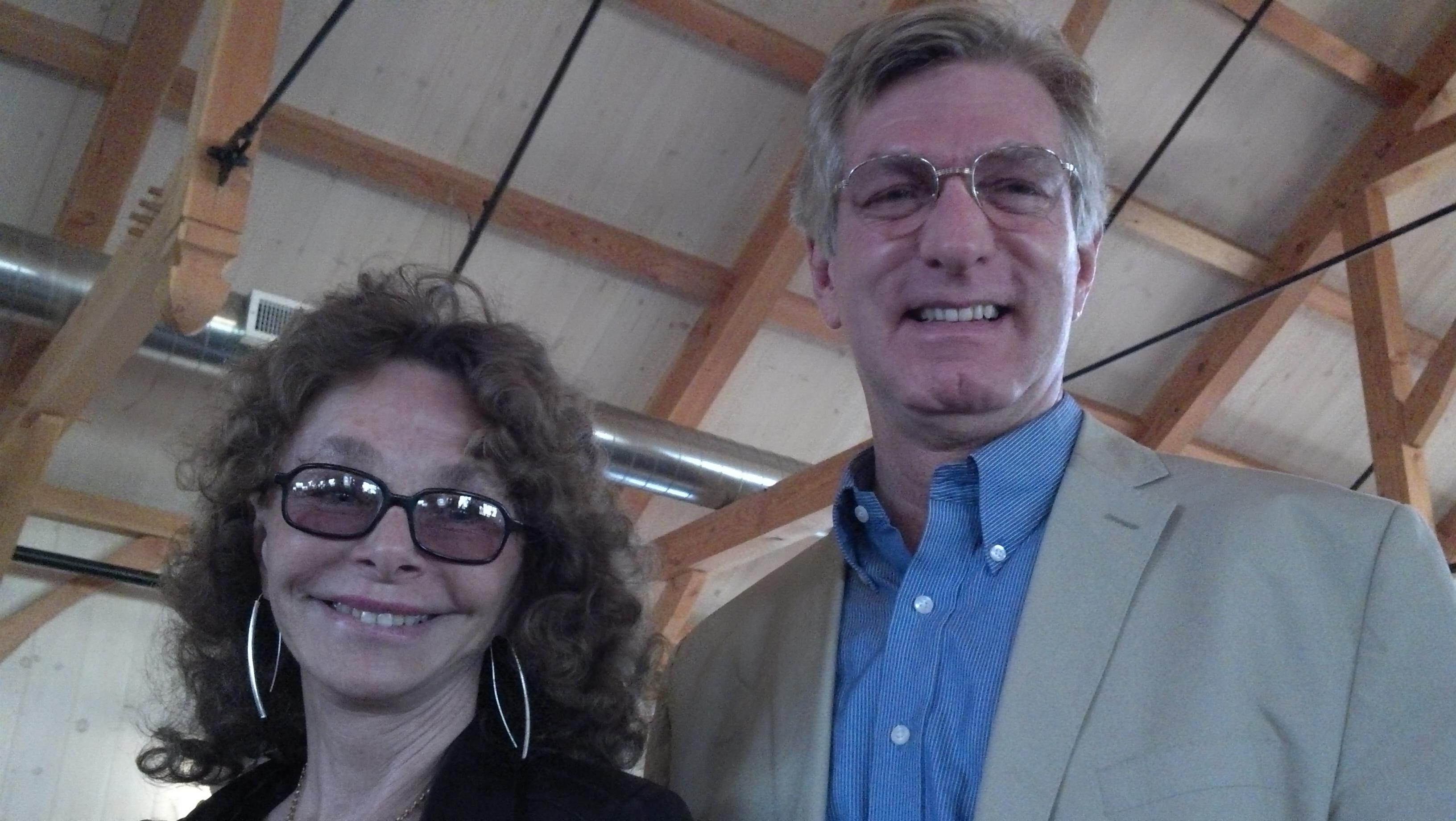
with Dr Valone.
|
Ms Moulton Howe is an Emmy Award-winning TV producer,
investigative reporter for radio and internet and author who goes
directly to the men and women at the forefront of science and
environmental breakthroughs and to firsthand eyewitnesses of high
strangeness. Howe has received two dozen TV production and
journalism awards for excellence. Earthfiles.com received the 2006
W3 Silver Award for excellence in news category; the 2003 Web
Award for Standard of Excellence; and the 2000 Encyclopaedia
Britannica Award honoring internet excellence.
Her Friday evening presentation was amazing, with a
standing room only attendance. For 2 hours, she spoke about the
Electrogravitics metal pieces recovered at the Roswell crash and
which have been analyzed and authenticated . She showed reports
and pictures of the parts and their effects. She also
had film clips of military personnel who shared their experiences
and encounters with electrogravitic and Exo technology.
After the talk was over, many still surrounded her for
another hour, asking questions. It was a memorable evening
indeed.
|
|
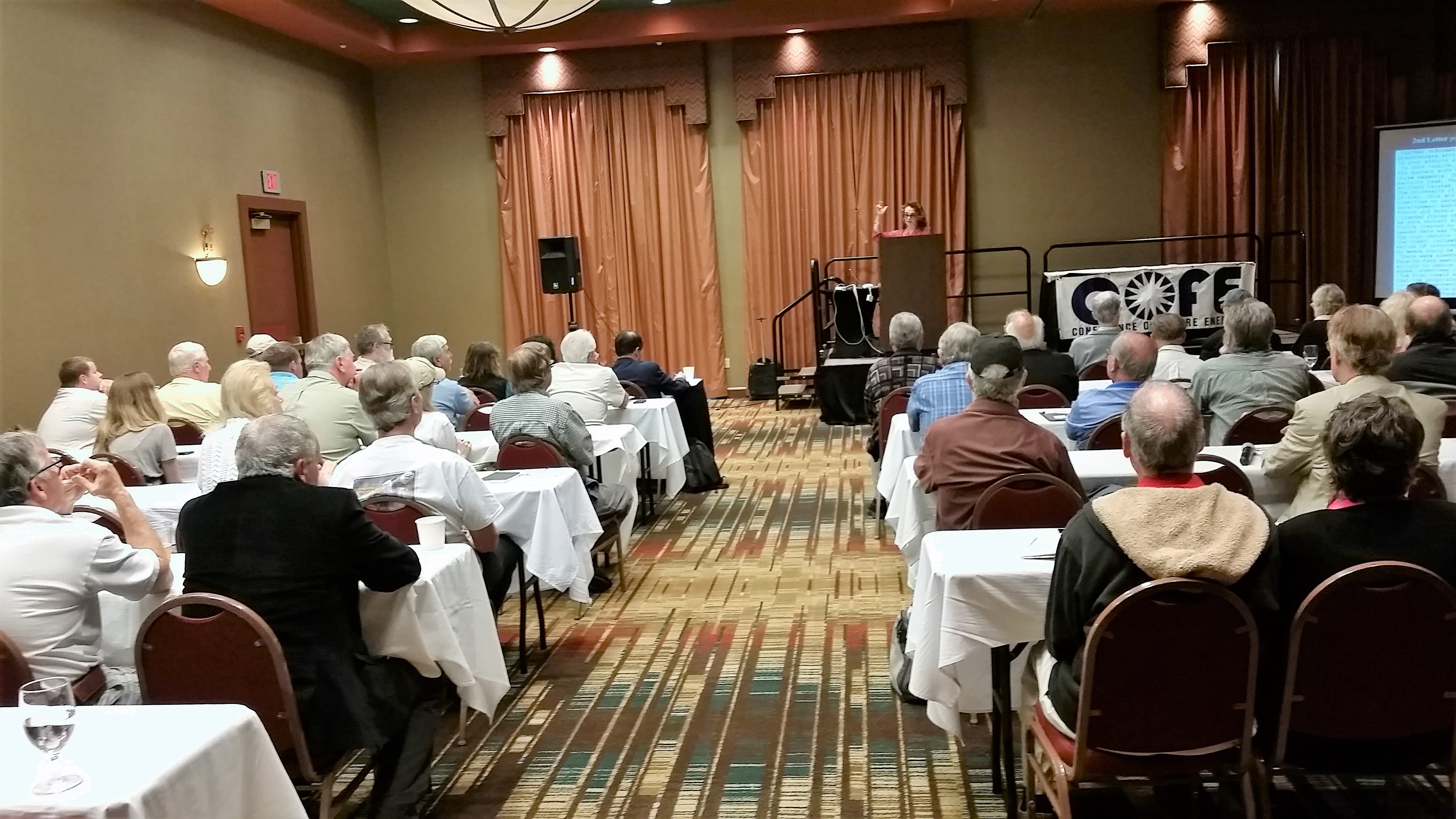
Linda Moulton Howe during her COFE8 presentation
|
Dr. Norman Shealy, is a neurosurgeon and one of the
world's leading experts in stress and pain management as well as
energy medicine. A true innovator in the field, he holds 10
patents for ground-breaking discoveries and has published over 300
articles and 25 books. He founded the Shealy Institute in
1971, for therapy and research of chronic pain. It was the first
comprehensive holistic center in the country, resulting in many
pioneering treatments. He has helped bridge the gap between
holistic and traditional western medicine.
|

|
|
Norm Shealy, explaining the Ring of Fire.
|
|
Dr Shealy's presentation was a breakthrough on the
Biochemistry and Physics of Longevity. He demonstrated how
DHEA levels are significant indicators of aging, atherosclerosis
and reduced immune competency. He showed how using his methods and
various "Rings" including the Ring of Fire, we can
increase DHEA and calcitonin production naturally. He also showed
how he can increase regeneration of the DNA's telomeres using
Transcutaneous acupuncture on the Rings of Fire and Crystal.
Also using specific blends of essential oils applied to
acupuncture points can increase telomere length. Standing
ovation from the crowd followed.
Our President Tom Valone, presented on the
Applications of Electrogravitics for Advanced Propulsion. The
global prospective toward space propulsion will aggressively
continue moving forward to develop supremacy in space-oriented
technologies creating a more competitive international environment
allowing far-term ideas to develop within a more near term focus.
He presented on the innovative theories and concepts in
electrogravitics and electrokinetics that could yield tremendous
technological and economic dividends in both investments dollars
and potential applications for future generations.
Another groundbreaking presentation was by long time
IRI Supporter and Board Member, Dr. Elliott Maynard.
His presentation entitled " Brave New Mind: Future Science
for a New Biosphere was introduced by his colleague Ms. Karen
Reider and his video presentation was amazing. His book on the topic is
also available and we encourage all who are interested in
the future of our planet to get one!
Mike Gamble, last year disclosed the use of Gyros and
Inertial Propulsion by BOEING, in all their Space Satellites. This
year he presented another amazing finding, that of the famous
Tesla Electric Pierce Arrow Car. The web has many stories
about it, some real, some false about how it operated.
Slide after slides Mike provided specifications and measurements
that proved Tesla could have accomplished this by reverse
engineering it. He even produced a small working model!. All
his work is also included in our latest book: Nikola Tesla Electricity Unplugged:
Wireless Transmission of Power as the Master of lightning
intended".
Tim Wilson, another long time IRI supported presented
his astounding slide presentation on the Dumbbell Atom: Building
Blocks of Matter replicated. He has built and replicated
more free energy devices and magnetic motor than perhaps any
other person we know! His presentation showed how magnetic
structures resemble the cells structure and that there seems to be
some kind of an "atomic glue" that holds all matter
together.
His slides show all his replications and measurements
he has performed for years.
He even gave a demonstration and you can see it on
the recorded talk
Dr Robert DeBiase had an excellent presentation on
his Quantum Fire Project related to Casimir
forces. He proposed many convincing equations and is working
on a prototype model which shows intriguing effects.
Dr. Thorsten Ludwig, from Germany presenting his latest
findings on the "Energy Extraction and Detection with
Zero Point Energy, Magnetism and Consciousness, a breakthrough
presentation indeed!
Moray King gave his amazing presention on Nanobubbles
and Nanocavity Plasma, including many videos on breakthroughs
taking place in Japan.
Donald Reed, presented his scholarly paper on the
Stueckelberg Off-Mass Shell Model for Particle interaction and how
it supports Low energy nuclear reactions.
William Alek gave two excellent presentation on
Antigravity and Faster than Light modifications and the
second on how to construct Free Energy devices.
Stephen Weingandt presented on a the technology
that helps with car mileage and water irrigation, for a healthy
environment.
All who attended COFE8 carried back with them the
latest and most invaluable information on Energy, Propulsion and
Bioenergetics. IF you would like to order the any of the
presentations, please order them on our website
Specify in comment field, speakers you want to order.
- Thomas Valone PhD -
Electrogravitics & Electrokinetics Propulsion
- Mike Gamble - The Real
Tesla Car Motor, Batteries not Required
- William Alek -
Inertial/Gravitational Mass Modification
- Thorsten Ludwig PhD -
Energy Extraction with ZPE and Magnetism
- Steven Weigandt MS - New
Solutions for you!
- Moray King - Nanobubble
Revolution and Nanocavity Plasma
- Robert DeBiase - Quantum
Fire Project
- Tim Wilson - Monopole
Magnet Dumbbell
- David Froning - Faster than
Light Experiments Simulations
- Don Reed - Stueckelberg Off
Mass Shell Model
- Linda Moulton Howe -
Electrogravitics Potential of Laminated Metals (2 Hrs)
- Norman Shealy MD - The
Basis for Longevity
- Norman Shealy MD -
Biochemistry and Physics of Longevity
- Bob Boyce - Battery Smacker
& Water Smacker
- William Alek - Constructing
Free Energy Devices
If you would like to watch a free sample on
Vimeo of COFE7 from 2015
|
|
3) Fish Piezoelectric Generators
|
|
By Energy Harvesting
Journal, September
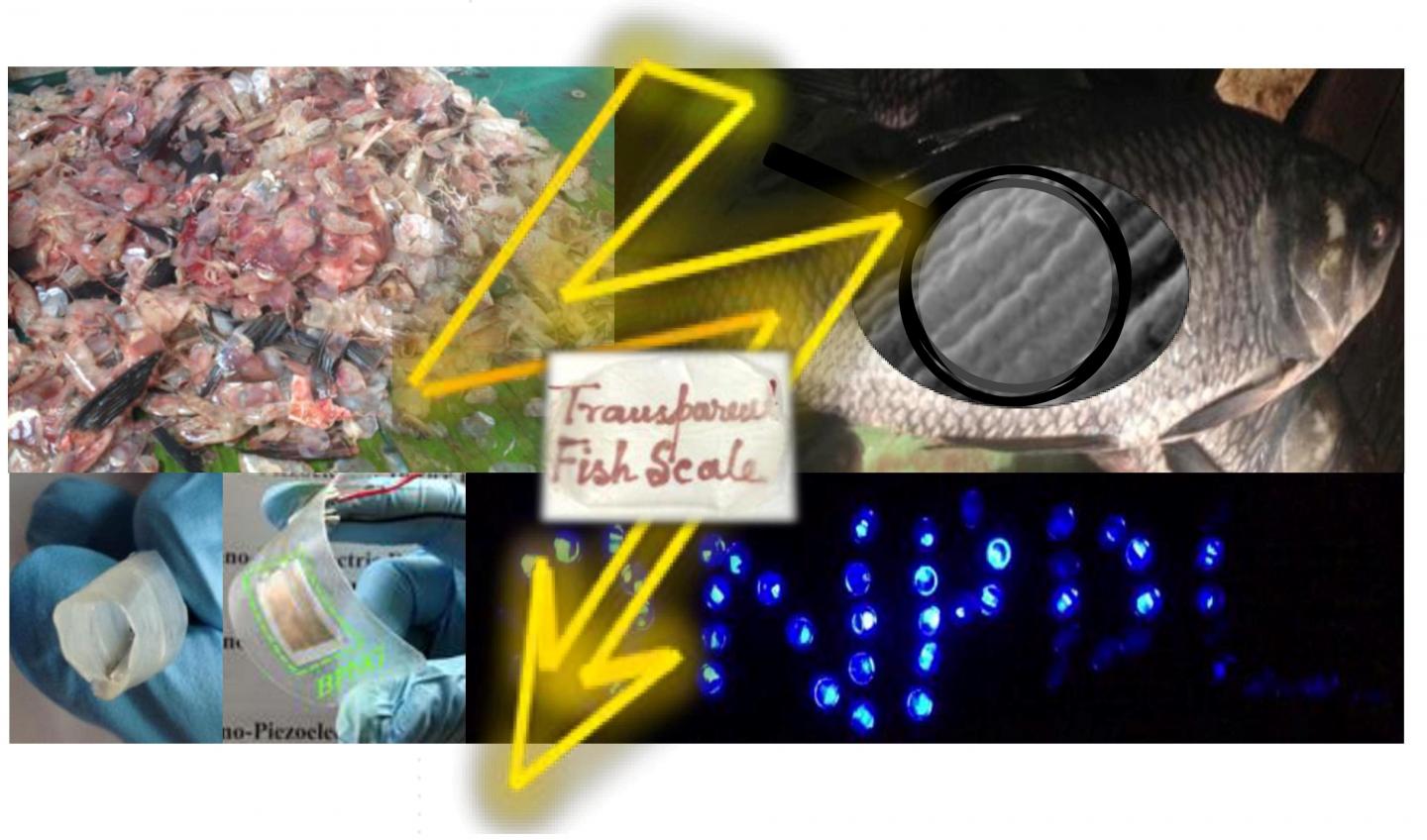
Large quantities of fish are consumed in India on a
daily basis, which generates a huge amount of fish
"biowaste" materials. In an attempt to do something
positive with this biowaste, a team of researchers at Jadavpur
University in Koltata, India explored recycling the fish
byproducts into an energy harvester for self-powered electronics.
The basic premise behind the researchers' work is
simple: Fish scales contain collagen fibers that possess a
piezoelectric property, which means that an electric charge is
generated in response to applying a mechanical stress. As the team
reports this week in Applied Physics Letters, from AIP Publishing,
they were able to harness this property to fabricate a
bio-piezoelectric nanogenerator.
To do this, the researchers first "collected
biowaste in the form of hard, raw fish scales from a fish
processing market, and then used a demineralization process to
make them transparent and flexible," explained Dipankar
Mandal, assistant professor, Organic Nano-Piezoelectric Device
Laboratory, Department of Physics, at Jadavpur University.
The collagens within the processed fish scales
serve as an active piezoelectric element. "We were
able to make a bio-piezoelectric nanogenerator -- a.k.a. energy
harvester -- with electrodes on both sides, and then laminated
it," Mandal said.
While it's well known that a single collagen
nanofiber exhibits piezoelectricity, until now no one had
attempted to focus on hierarchically organizing the collagen
nanofibrils within the natural fish scales.
"We wanted to explore what happens to the
piezoelectric yield when a bunch of collagen nanofibrils are
hierarchically well aligned and self-assembled in the fish
scales," he added. "And we discovered that the
piezoelectricity of the fish scale collagen is quite large (~5
pC/N), which we were able to confirm via direct measurement."
Beyond that, the polarization-electric field
hysteresis loop and resulting strain-electric field hysteresis
loop -- proof of a converse piezoelectric effect -- caused by the
"nonlinear" electrostriction effect backed up their
findings. The team's work is the first known demonstration
of the direct piezoelectric effect of fish scales from electricity
generated by a bio-piezoelectric nanogenerator under mechanical
stimuli -- without the need for any post-electrical poling
treatments.
"We're well aware of the disadvantages of
the post-processing treatments of piezoelectric materials,"
Mandal noted. To explore the fish scale collagen's
self-alignment phenomena, the researchers used near-edge X-ray
absorption fine-structure spectroscopy, measured at the Raja
Ramanna Centre for Advanced Technology in Indore, India.
|
|
4) Scientists Solve Puzzle of Converting Gaseous
Carbon Dioxide to Fuel
|
|
By Phys.org September 2016
Converting
greenhouse gas emissions into energy-rich fuel using nano silicon
(Si) in a carbon-neutral carbon-cycle is illustrated. Credit:
Chenxi Qian
Every year, humans advance climate change and global
warming - and quite likely our own eventual extinction - by
injecting about 30 billion tonnes of carbon dioxide into the
atmosphere
A team of scientists from the University of Toronto
(U of T) believes they've found a way to convert all these
emissions into energy-rich fuel in a carbon-neutral cycle that
uses a very abundant natural resource: silicon. Silicon, readily
available in sand, is the seventh most-abundant element in the
universe and the second most-abundant element in the earth's
crust.
The idea of converting carbon dioxide
emissions to energy isn't new: there's been a global race to
discover a material that can efficiently convert sunlight, carbon
dioxide and water or hydrogen to fuel for decades. However,
the chemical stability of carbon dioxide has made it
difficult to find a practical solution.
"A chemistry solution to climate
change requires a material that is a highly active and
selective catalyst to enable the conversion of carbon dioxide to
fuel. It also needs to be made of elements that are low cost,
non-toxic and readily available," said Geoffrey Ozin, a
chemistry professor in U of T's Faculty of Arts & Science, the
Canada Research Chair in Materials Chemistry and lead of U of T's
Solar Fuels Research Cluster.
In an article in Nature
Communications published August 23, Ozin and colleagues
report silicon nanocrystals that meet all the criteria. The
hydride-terminated silicon nanocrystals - nanostructured hydrides
for short - have an average diameter of 3.5 nanometres and feature
a surface area and optical absorption strength sufficient to
efficiently harvest the near-infrared, visible and ultraviolet
wavelengths of light from the sun together with a powerful
chemical-reducing agent on the surface that efficiently and
selectively converts gaseous carbon dioxide to gaseous
carbon monoxide.
The potential result: energy without harmful
emissions.
"Making use of the reducing power of
nanostructured hydrides is a conceptually distinct and
commercially interesting strategy for making fuels directly from
sunlight," said Ozin.
The U of T Solar Fuels Research Cluster is working to
find ways and means to increase the activity, enhance the scale,
and boost the rate of production. Their goal is a laboratory
demonstration unit and, if successful, a pilot solar refinery.
Published Article in Science Wei Sun et al,
Heterogeneous reduction of carbon dioxide by hydride-terminated
silicon nanocrystals, Nature Communications (2016). DOI:
10.1038/ncomms12553
|
|
5) New Fabric Uses Sun and Wind to Power Devices
|
|
ByMark Dansie, Revolution
Green September 2016
Fabrics that can generate electricity from physical
movement have been in the works for a few years. Now researchers
at Georgia Institute of Technology have taken the next step,
developing a fabric that can simultaneously harvest energy from
both sunshine and motion.
Combining two types of electricity generation into
one textile paves the way for developing garments that could
provide their own source of energy to power devices such as smart
phones or global positioning systems.
"This hybrid power textile presents a novel
solution to charging devices in the field from something as simple
as the wind blowing on a sunny day," said Zhong Lin Wang, a
Regents professor in the Georgia Tech School of Materials Science
and Engineering.
The research was reported September 12 in
the Nature Energy.
To make the fabric, Wang's team used a commercial
textile machine to weave together solar cells constructed from
lightweight polymer fibers with fiber-based triboelectric
nanogenerators.
Triboelectric nanogenerators use a combination of the
triboelectric effect and electrostatic induction to generate small
amount of electrical power from mechanical motion such as
rotation, sliding or vibration.
TENTS, CURTAINS OR WEARABLE GARMENTS.
Wang envisions that the new fabric, which is 320
micrometers thick woven together with strands of wool, could be
integrated into tents, curtains or wearable garments.
"The fabric is highly flexible, breathable,
light weight and adaptable to a range of uses," Wang said.
Fiber-based triboelectric nanogenerators capture the
energy created when certain materials become electrically charged
after they come into moving contact with a different material. For
the sunlight-harvesting part of the fabric, Wang's team used
photoanodes made in a wire-shaped fashion that could be woven
together with other fibers.
"The backbone of the textile is made of
commonly-used polymer materials that are inexpensive to make and
environmentally friendly," Wang said. "The electrodes
are also made through a low cost process, which makes it possible
to use large-scale manufacturing."
In one of their experiments, Wang's team used a
fabric only about the size of a sheet of office paper and attached
it to rod like a small colorful flag. Rolling down the windows in
a car and letting the flag blow in the wind, the researchers were
able to generate significant power from a moving car on a cloudy
day. The researchers also measured the output by a 4 by 5
centimeter piece, which charged up a 2 mF commercial capacitor to
2 volts in one minute under sunlight and movement.
"That indicates it has a decent capability of
working even in a harsh environment," Wang said.
While early tests indicate the fabric can withstand
repeated and rigorous use, researches will be looking into its
long-term durability. Next steps also include further optimizing
the fabric for industrial uses, including developing proper
encapsulation to protect the electrical components from rain and
moisture.
REFERENCE
This work was supported by the Hightower Chair
foundation, KAUST and the "thousands talents" program
for pioneer researcher and his innovation team, National Natural
Science Foundation of China and the Fundamental Research Funds for
the Central Universities. Any conclusions or recommendations are
those of the authors and do not necessarily represent the official
views of the sponsoring organizations.
CITATION: Jun Chen, Yi Huang, Haiyang Zou, Ruiyuan
Liu, Changyuan Tao, Xing Fan, and Zhong Lin Wang,
"Micro-cable structured textile for simultaneously harvesting
solar and mechanical energy," (Nature Energy, September 12,
2016).
|
|
If you enjoy this
service, please consider making a donation by clicking on
the button below. We are a 501 (C)3 Non Profit Institute and your
donations are fully deductible to the maximum allowed by law.
We are registered with the Non-Profit directory GUIDESTAR
and have a GoldStar Rating.
|
|
|
Shopping at Amazon? click here
& 0.5% will be donated to IRI
|
|
| | | |